 Patient Portal

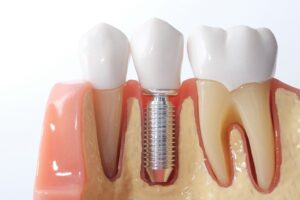
Dental implants are often described as one of the strongest and most durable ways to replace missing teeth. Because an implant is anchored into the jawbone, it can feel remarkably stable and allow you to bite and chew comfortably. But does that mean dental implants are actually stronger than natural teeth? Not necessarily. Natural teeth and dental implants are built differently, and each has unique strengths.
Natural Teeth Are Surprisingly Strong
Healthy natural teeth are incredibly durable. Tooth enamel is the hardest substance in the human body and protects the inner portions of your teeth from everyday chewing forces.
Natural teeth also have a periodontal ligament, a layer of tissue that connects the tooth to the surrounding bone. This ligament provides a small amount of movement and helps absorb and distribute biting forces.
However, natural teeth can become weakened by cavities, cracks, gum disease, grinding, trauma, and other problems. Once significant damage occurs, a replacement may be necessary.
Why Are Dental Implants So Durable?
A dental implant typically consists of a titanium or other biocompatible post that is surgically placed into the jawbone. Over a period of several months, a successful implant fuses with the surrounding bone through a process called osseointegration.
This creates a stable foundation for an artificial tooth, such as a crown. Because the implant is securely anchored, it doesn’t have the same type of movement as a natural tooth.
The materials used for implant restorations are also designed to withstand everyday chewing. You can typically expect the bite force of a dental implant to be 80 to 90 percent of that of natural teeth.
However, the implant and crown are not indestructible. Crowns can chip, crack, or wear, and implants can develop complications if they aren’t properly maintained.
Implants Don’t Have All the Advantages of Natural Teeth
Although implants provide excellent stability, natural teeth have important biological advantages. Natural teeth contain living tissues and nerves and are supported by structures that help the body sense pressure during chewing.
Dental implants don’t have a periodontal ligament or natural tooth nerve. This means they can feel different from natural teeth even when they function very well.
Whatever You Have, Protect Your Investment
Whether you have natural teeth or dental implants, caring for your smile is essential. Brush twice a day, floss daily between your teeth and around implants, avoid using your teeth to open packages or bite hard objects, and visit your dentist regularly every 6 months for a checkup and cleaning.
Dental implants are exceptionally durable and stable, but they aren’t simply “stronger” than natural teeth. They’re designed to replace missing teeth and provide long-lasting function, not to improve upon every biological feature of a natural tooth. Your dentist can help you understand whether implants are the right solution for your individual needs!
About the Practice
Baytown Gentle Dental boasts a 98 percent success rate when it comes to dental implant treatment! Our team, led by Drs. Seif and Jindal, conveniently completes the entire process in-house using the latest technology for enhanced treatment planning. For more information and booking, visit our website or call our Baytown, TX office at (281) 837-9122.